Dr. Bascom Palmer's
Legacy
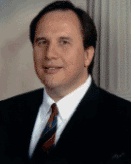 By
David Cano, M.D.
By
David Cano, M.D.
President, Florida Society of Ophthalmology
Today I was standing and looking at the highest mountain in
the North America, Denali or “the great one” in the native
translation. It reminded me of a time that my wife and I
volunteered in an eye camp in Nepal in the Himalayas. I
remember the importance of vision for those in need
especially where it is difficult to obtain this care for
many reasons. This made me ponder the issues of eye care
needs locally in our State. We are experiencing a crisis in
the availability superior eye care for those who do not have
the resources to afford it. This brings to mind the work of
Dr. Bascom Palmer who set about to improve eye care for all
Floridians.
Bascom
Palmer is a well known name in Florida signifying excellence
in eye care; plus it was the name given to one of the top
ranked eye institutes in the world and is located in Miami.
What a
lot of people don’t know is that Bascom Palmer was a hard
working and committed pioneering ophthalmologist serving as
president of our organization in 1947 when it also included
the ear, nose and throat as a specialty.
Dr. Bascom Headon Palmer, had a vision and a dream. He
envisioned: “An ophthalmology institute in a medical
center second to none in the nation. It will be a
clinic where both the indigent and others may be
treated. It will serve this community as a clearinghouse
for research and for reliable and dependable information
on care of the eyes and conservation of sight.”
His dream came as a great beacon light of hope to those
in “dire need” of eye care. Dr. Palmer spent most of his
life working to fulfill that dream. He was able to
encourage the Lighthouse for the Blind to provide the
land – the site where the Anne Bates Leach Eye Hospital
now stands – and raise more than $200,000 to establish
the Institute. In 1952 he helped found the University Of
Miami School Of Medicine. And, shortly before his death
in 1954, he witnessed the inauguration of the new
school’s first Division of Ophthalmology.
As your incoming president, I think it’s important to
focus on the good work of Dr. Palmer and generate
enthusiasm among our members to serve those who are most
needy.
I, like Dr. Palmer, share an equal vision that the same
care the University of Miami provides in Dade County is
available wherever an academic institution like their
Eye Institute goes.
After all, philanthropists in Palm Beach, Broward and
Collier counties assume their donations will be used for
the good works for which the Miami Center has been
known. An article from the Miami Herald from July 2004
that is also quoted in the University of Miami website
has Bascom Palmer’s Chairman, Dr. Carmen Puliafito,
stating; "We provide all the indigent [eye] care in Dade
County, and it’s a matter of great pride for us. Any
patient is going to get the same medical care, the same
technology. We have billionaires -- you’ll see Aston
Martins or Bentleys parked out front -- but we’ll also
have the person who rafted over in the past six months."
From my view in Palm Beach County I can see a lot of
challenges that face ophthalmologists throughout
Florida. As your president I hope we can begin to deal
with these issues in an energetic way. Here are some of
those issues and my thoughts on what we as
ophthalmologists in Florida can do.
1. Serve those people in Florida who have
no access to eye care.
In Palm Beach County and throughout all of south Florida
there are tens of thousands of people that work hard
every day and are losing their vision because of no
access to treatment. It’s important that all FSO
members reach out to community leaders and donate eight
hours a month to screening for glaucoma, diabetes and
other vision problems.
All of us are aware of eye care mission trips to South
America and the Caribbean. We need not forget that there
is a mission field right here in our own back yard.
2. The challenge of emergency room care.
Throughout Florida emergency care is becoming a major
issue. Fewer and fewer physicians are taking call
because they are not being reimbursed by the hospitals
where they have staff privileges. We owe it to the
people of Florida to work as hard as possible to make
sure there are ophthalmologists available to provide
needed emergency room coverage. One of the roles of our
academic institutions as they expand their facilities
should be to provide emergency room coverage along the
model that Dr. Bascom Palmer envisioned.
3.The role of academic health providers.
One of the newest trends in Florida has been the
expansion of well known medical institutions into
counties far from their home base. This trend, in
ophthalmology, has a silver lining. These well known
institutions can help fill the eye health care gap that
now exists in Florida. For example, their academic
satellite offices can work with community groups to
serve the indigent and those with no access to eye care.
These well respected brand name institutions can also
work to provide emergency care coverage when needed
Together we can serve our communities’ needs, further
the ophthalmic education of all, and more importantly
show other subspecialties how collaboration can benefit
the community, community doctors and the University.
It’s a well known fact that for each dollar spent on the
prevention of vision loss and eye care, there is a 5
dollar return to the community and that means we need to
demonstrate that our profession is a leader in providing
such care.
I am very excited about the opportunities the Florida
Society of Ophthalmology has in the future. Our state
has an elderly and diverse population, with many needs.
It’s right and fair that we all give back to our
communities that have provided us so much.
It will be my goal as president to work to communicate
to you our members on how we can meet the challenges and
opportunities in the future.
Unlike those poor people in Nepal, we have more
resources here at home and working together we can make
a difference right here in our home State and be an
example to others.